
In case you are confused…
Shabbat Shalom.
Unplugging from Israel.

In case you are confused…
Shabbat Shalom.
Unplugging from Israel.
A Belgian drug lord spent millions of dollars investing in luxury real estate in Dubai. Belgian authorities successfully extradited him today, but it’s unclear what has happened to the profits he reaped from his property ventures in the emirate.

Banner: Geraint Tellem/Robert Harding RF/robertharding via AFP | The Dubai skyline.
De Tijd
Knack
Eldiyar Arykbaev
OCCRP

OCCRP
Also published by our partners De Tijd (Belgium, in Flemish) and Knack (Belgium, in Flemish)
October 14, 2026
|
8 min read Share Article AaText Settings
Belgian drug lord Nasserdine Tarrahi, who has been convicted of drug-related offenses in three separate cases, was extradited from Dubai to Belgium on October 14, the Antwerp prosecutor’s office confirmed to OCCRP and De Tijd.
Tarrahi, 38, was a senior figure in the “Turtles,” a Belgian-Moroccan gang that specialized in retrieving South American cocaine from containers passing through the port of Antwerp. Later in his career he fled to Dubai, where he continued to run drug trafficking operations from the Emirati city-state, according to the most recent court verdict against him, issued in May.
But although Belgian justice has finally caught up with him, authorities have struggled to confiscate the proceeds of his crimes, which a court in Antwerp estimated could amount to 5 million euros ($5.5 million). They only managed to find the equivalent of around $20,000 in cash, plus an assortment of exercise equipment crammed into an apartment in Antwerp he used as a base for drug trafficking.
Now, OCCRP and its partners in Belgium have learned that Tarrahi had stashed substantial assets abroad: He purchased six luxury properties in Dubai between 2019 and 2021, investing the equivalent of $6.2 million, according to property data obtained by OCCRP.
Although he has sold all the properties since then, the findings suggest he was able to move a significant amount of wealth into Dubai unbeknownst to authorities — and even profit from his real estate deals. Three of his properties were purchased for a total of $3.8 million and sold for $6.6 million three years later. (The sales price of the others is not known.)
This story draws on several datasets and leaks obtained by OCCRP and partners about property ownership in Dubai, including our Dubai Unlocked project, a scrape of the Dubai Land Department, and financial data of facilities management firms in Dubai.
He was even able to gain permanent residency in Dubai based on his property holdings — with a visa issued barely a year after he was convicted in Belgium of trafficking drugs from his Dubai home base, OCCRP has learned.
Tarrahi’s lawyer did not respond to a request for comment. Under Belgian law, Tarrahi has the right to appeal the verdict of the Antwerp court when he arrives back on Belgian soil.
Dubai’s General Directorate of Residency and Foreigners Affairs and the UAE’s Ministry of Interior did not respond to requests for comment from OCCRP.

Credit: Elien Melis/Sky Vision/Port of Antwerp-Bruges
The port of Antwerp, where the “Turtles” were active.
Known for financial secrecy and low taxes, Dubai is where many of the world’s rich and powerful go to spend money they are unable to use elsewhere. A 2024 collaborative investigation by OCCRP and partners, Dubai Unlocked, mapped some 800,000 Dubai properties and found that many were owned by sanctioned politicians, alleged criminals, and or public officials and family.
Since then, the United Arab Emirates has passed a new anti-money laundering law that authorities promise will ease cross-border collaboration. The Belgian Justice Ministry says Dubai has been cooperative with a new drive to extradite criminals, but experts say it’s still unclear if the UAE is serious about targeting illicit wealth within its borders.
“Investigative reporting has repeatedly identified Dubai properties linked to individuals implicated in major corruption scandals … yet public information remains limited on whether UAE authorities investigated the potential laundering of illicit proceeds through those properties, and with what results,” said Hugh Jorgensen, the Corrupt Money Flows program lead at Transparency International.
The desert city is where Tarrahi chose to build a new life after the “Turtles” gang became embroiled in a war with a group of Dutch rivals, sparking a wave of shootings and gangland assassinations across the two countries. (The war between the two groups later served as inspiration for a wildly popular Belgian action film, “Gangsta.”)
It is unclear exactly when he relocated to Dubai, but immigration records obtained by OCCRP show that Tarrahi has visited the Emirates numerous times over the course of the last two decades. He was issued seven UAE visas between 2010 and 2020, according to data from the Federal Authority for Identity, Citizenship, Customs & Port Security, a UAE government agency responsible for citizenship and residency.
In 2013, in the midst of the “Turtles” gang war, Tarrahi was convicted by an Antwerp court of “jointly committed drug-related offenses.” The verdict was upheld by an appeal court the following year. He was sentenced to two years in prison, with one year suspended. (He spent around five months in pre-trial detention after his initial arrest in 2009, but reporters could not determine if he ever completed the sentence.)
But his criminal conviction didn’t stop him from gaining legal status in Dubai: He was granted a short-term residency visa in 2020 and was able to renew it two years later. In February 2023 the UAE granted him a ten-year visa as a property owner.
He undoubtedly qualified: Between 2019 and 2021, Tarrahi purchased six properties in Dubai for a total of $6.2 million, according to leaked real estate data obtained by OCCRP.
Three of them were flats in the Grand Bleu Tower, a luxury skyscraper with interiors by star fashion designer Elie Saab. As of September 2026, he had sold them all, but documents show that he was being charged service fees for one of the units as recently as the first quarter of 2026.
He also purchased a unit at one of the Bluewaters Residences buildings, on the luxury man-made Bluewaters Island, in December 2019. He paid 5.8 million dirhams ($1.6 million) for the three-bedroom unit, and sold it for 15 million dirhams (over $4 million) just over four years later, according to leaked property data. A tenancy contract shows that he earned the equivalent of around $177,000 renting the apartment out for a year.

Credit: Emmanuel Catteau / Hans Lucas / Hans Lucas via AFP
The Dubai Hills Estate luxury residences under construction in 2019. Nasserdine Tarrahi purchased a property there in 2021.
In March 2021, Tarrahi bought a property in Dubai Hills Estate, a gated community advertised as the “green heart of Dubai,” for the equivalent of $1.3 million. (He sold it later that year).
Just a month later, he acquired a unit in the Marina Vista Tower — a beachfront high-rise with sweeping skyline views and an outdoor swimming pool — for another $1.3 million. The apartment is no longer in Tarrahi’s possession, according to Dubai Land Department data, but it’s unclear when it was sold.
Not long after this property investment spree, Tarrahi was convicted again in Belgium for his involvement with another drug trafficking group, known as the Mixers. In February 2022, he was sentenced in absentia to 5 years for co-perpetration of cocaine trafficking, bribery of a police officer, forgery, money laundering, and participation in a criminal organization.
The Antwerp prosecutor’s office declined to comment on whether Belgian authorities at the time asked Dubai to arrest Tarrahi for this conviction.
Still, he continued to run his drug businesses from his Dubai base and give orders to associates in Belgium, according to the verdict in the third drug case against him, issued by an Antwerp court in May.
To communicate, they relied on the encrypted messaging service Sky ECC. Investigators found that Tarrahi used the same passwords across various accounts: “dubai123” and “flapdrol,” which means “fool” in Dutch slang.
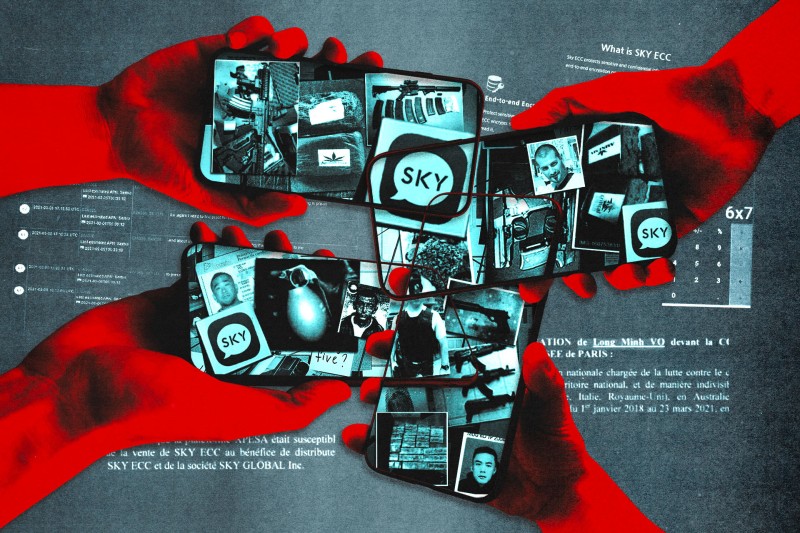
From Dubai, he also used cameras to monitor activities at an apartment in Antwerp used by his associates to store and repackage cocaine before sending it on to end buyers. He could even open and close the gates and garage doors remotely.
When police searched the property in June 2023, they found 12 bricks of cocaine and a shopping bag with two firearms inside a parked Mazda car. Another 30 cocaine bricks were found hidden in a secret compartment in a Fiat on the premises.
They also found 30,000 euros’ worth of exercise equipment, like kettlebells, boxing gloves, and a treadmill. These, along with 16,000 Swiss francs (around $17,000) and another approximately 2,000 euros in bank funds, were itemized in the court’s verdict as assets seized from Tarrahi.
The Antwerp prosecutor’s office declined to comment on whether the court had been aware of Tarrahi’s six Dubai apartments, but the court’s judgement made no mention of the property. A spokesperson for the federal office responsible for seizures in the Belgian justice system confirmed that there have been no seizures of real estate in Dubai.
A spokesperson for her cabinet told De Tijd that the Justice Ministry is now in talks with Dubai authorities on how they can work together to ensure the seizure of criminal proceeds.
“Building on the success of the extraditions, the aim is to implement a similarly successful collaboration regarding the confiscation of criminal proceeds,” the spokesperson said.
The new UAE anti-money laundering law enacted last year is expected to make it easier to confiscate assets sought by foreign states, since the Emirates will no longer require a separate local investigation before cooperating with asset-freezing and confiscation orders from abroad.
But although the law improves the framework for asset recovery, “assets must first be identified before they can be seized, and a number of policy gaps continue to hinder this process” said Jorgensen of Transparency International.
For example, he said most real estate developers in the UAE are still not covered by anti-money-laundering obligations.
“This means that a criminal or corrupt person can purchase a property or housing project through a developer without the developer being required to conduct any due diligence checks.”
Jodi Vittori, a professor at Georgetown University who studies corruption and illicit finance, said enforcement could also be hindered by a lack of transparency in the autocratic UAE.
“There are theoretical rules and procedures, but at the end of the day, if the person is important enough or has the right connections, they don’t apply, because there’s no rule of law, there’s no accountability, there’s no transparency,” she said
October 14, 2026
Share Article:
Fact-checking was provided by the OCCRP Fact-Checking Desk.Research and data expertise was provided by OCCRP’s Research & Data Team.
De Tijd
Knack
Eldiyar Arykbaev
OCCRP
Investigative Editor, OCCRP
Based in the Netherlands, Ingrid Gercama joined OCCRP in 2025 as an investigative editor. Before joining OCCRP, she worked as a freelance investigative journalist reporting on crime, the environment, and politics. Her work has been published in more than fifteen countries, with bylines in major outlets including The Guardian and Süddeutsche Zeitung.
Ingrid has uncovered the illegal smuggling of tropical birds to the EU, reported on the operations of Balkan organized crime groups in the Netherlands and Belgium, revealed fraud with EU funds in Romania, and covered anti-corruption protests in Serbia and Georgia. Her cross-border investigations have contributed to law enforcement actions and she has won multiple awards.
Prior to becoming a journalist, Ingrid worked as an applied anthropologist in Ebola outbreaks in Africa, as well as in humanitarian aid and research. She studied cultural anthropology at the University of Amsterdam and holds a master’s degree in international development studies.
Also published by our partners De Tijd (Belgium, in Flemish) and Knack (Belgium, in Flemish)
NAZA: the film Israel does not want you to see
Oct 16, 2026 Today in Focus Oscar-winning filmmakers Yuval Abraham and Rachel Szor discuss their new documentary, NAZA, which exposes the AI systems that the Israeli military uses to rain down strikes on Gaza, causing the mass killing of civilians. Subscribe ►  / @todayinfocuspodcast
Based on the testimony of 24 military insiders, the documentary caused uproar in Israel, with the government threatening to strip the filmmakers of their citizenship. The Guardian’s Annie Kelly talks to the directors about how the film was made, and the price they paid for speaking out Chapters: 00:00 – Intro 01:59 – What was the story that you wanted to tell with NAZA? 04:52 – How AI is being used to survey and target people inside Gaza 08:49 – Margins of error 15:11 – What is Where’s Daddy? 18:53 – Which testimonies affected you the most? 27:10 – Mirroring the mass surveillance 33:56 – From critical acclaim to accusations of treason 42:25 – Has making NAZA changed you personally?
BUY GOLD, WEAR DIAMONDS.

Oct 15, 2026COL. Douglas Macgregor : Russia to Run Over Kiev
Iran is finding ways to SNEAK fuel exports right through the U.S. naval blockade…
LPG has escaped through the Gulf of Oman, totaling an estimated 4.1 MILLION barrels.
Tehran has reportedly concealed cargoes among the growing number of ship-to-ship transfers conducted by other Gulf producers off Oman.
Most Iranian petroleum exports are still being stopped or redirected, and U.S. Central Command insists its blockade remains “ironclad.” But that might be too strong a word for it…
Premiered 21 hours ago #nuclearwar#geopolitics#uschina
Is the world moving closer to a nuclear confrontation? In a wide-ranging geopolitical address, Jeffrey Sachs warns about growing tensions between the United States, Russia, China and other major powers, raising concerns over the risk of nuclear conflict.
It’s a frustrating blame game.
Published Oct 15, 2026 10:51 AM EDT
Add Futurism(opens Google in a new window or tab)More information
Can’t-miss innovations from the bleeding edge of science and tech Email address Sign Up
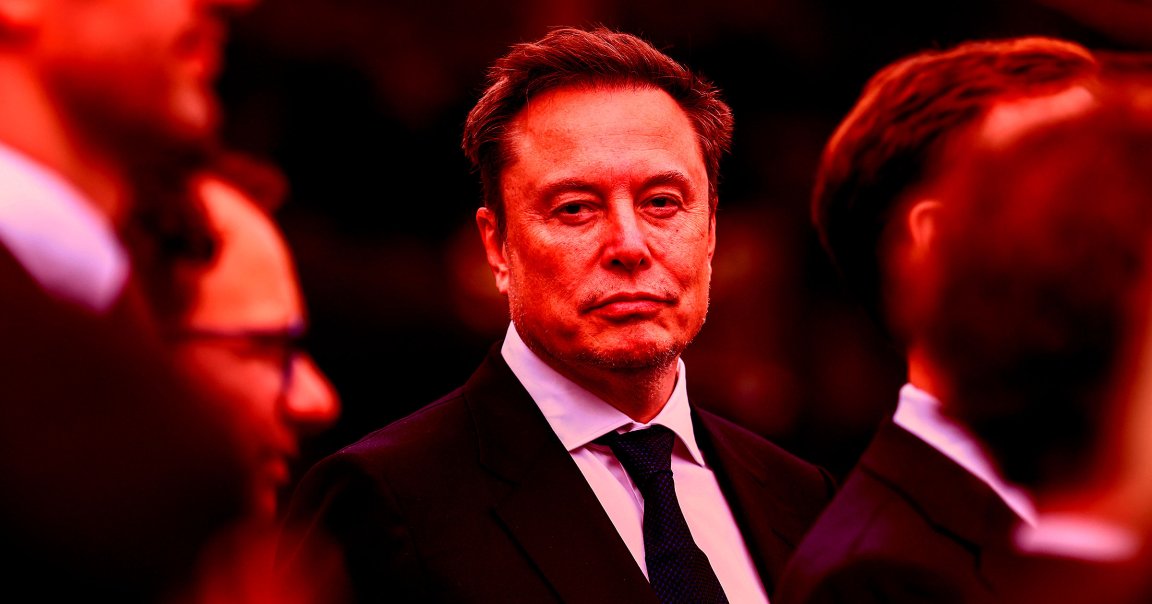
In early 2022, not long after Russia’s invasion began, SpaceX made good on CEO Elon Musk’s promise by shipping thousands of Starlink broadband internet terminals to the front lines of Ukraine.
The terminals quickly turned into a vital lifeline as many parts of the embattled region were plunged into the dark and cut off from the rest of the world.
But Musk has been accused of playing both sides, with biographer Walter Isaacson claiming the billionaire had secretly ordered SpaceX engineers not to turn on the Starlink satellite network near the Crimean coast in 2022 to disrupt what Musk called a “mini-Pearl Harbor.”
And as the war rages on some four years later, SpaceX’s terminals are once again making headlines. Ukrainian president Volodymyr Zelensky accused the space company of restricting access to its Starshield service, a military version of the service specifically developed for the Pentagon.
Yet neither Musk nor the White House are willing to take any blame for the disruption, with both sides pointing fingers at each other. In fact, Musk has now thrown president Donald Trump under the bus as the scandal deepens.
“Starshield systems are owned and controlled by the US government,” he tweeted on Wednesday. “Any limits on speed or usage are decided by the US military and ultimately POTUS.”
“Starlink is a commercial service owned and controlled by SpaceX,” he added. “Usage of Starlink is limited to civilian or defensive activities and cannot be used for offensive military action, as doing so would be inappropriate for a commercial company.”
It’s a bizarre missive, especially considering what Ukraine’s actions could easily be characterized as “defensive activities,” as many users of Musk’s social media network pointed out. Besides, there’s no question Musk has an enormous amount of sway in Washington, DC, meaning he easily could’ve had a say in the matter.
The timing was also suspicious, to say the least. As The Hill reports, Zelensky made his announcement just days after Trump announced a deal with Russian president Vladimir Putin to buy millions of tons of diesel to lower prices in the US ahead of the rapidly approaching midterm elections.
Lawmakers were appalled at the US seemingly dropping the ball on coming to Ukraine’s aid.
“Reports of Starlink failing in Ukraine are deeply alarming— potentially crippling air defense against Russia’s murderous missiles & drones,” tweeted senator Richard Blumenthal (D-CT) on Wednesday, hours before Musk chimed in on the subject. “Trump & Musk must be held accountable.”
Meanwhile, a subdued Zelensky mourned the loss of US support.
“Really, yes… but it’s a little bit more complicated than just my emotions or my feelings,” he said when asked if he feel betrayed by Trump on Wednesday. “It’s a pity that we are losing, we are losing a strong partner.”
By Thursday, the situation changed once more, with Ukraine’s strikes on Russian refineries resuming as Starlink and Starshield services had been restored to full capacity, as an unnamed Ukrainian official told Axios.
More on Starlink: Elon Musk Furious at Starlink Being Used for American Suicide Drones

Add Futurism as a preferred source on Google to see more of our reporting.

I’m a senior editor at Futurism, where I edit and write about NASA and the private space sector, as well as topics ranging from SETI and artificial intelligence to tech and medical policy.
TAGS IN THIS STORY
1 of 2,116
 Axios AM: MAGA pushes martial law
Inbox

| Mike Allen Unsubscribe | 10:44 AM (50 minutes ago) | ||
to me | |||
  View in browser PRESENTED BY JPMORGANCHASE Axios AMBy Mike Allen · Oct 16, 2026 View in browser PRESENTED BY JPMORGANCHASE Axios AMBy Mike Allen · Oct 16, 2026 Happy Friday! Brew Crew in the World Series! Smart Brevity™ count: 1,364 words … 5 mins. Thanks to Noah Bressner for orchestrating. Edited by Bill Kole. 1 big thing: MAGA pushes martial law Happy Friday! Brew Crew in the World Series! Smart Brevity™ count: 1,364 words … 5 mins. Thanks to Noah Bressner for orchestrating. Edited by Bill Kole. 1 big thing: MAGA pushes martial law  Photo illustration: Sarah Grillo/Axios. Photos: Getty Images Photo illustration: Sarah Grillo/Axios. Photos: Getty Images MAGA activists are pushing for President Trump to resort to extraordinary measures — including martial law — if they believe the midterm elections are “rigged,” Axios’ Brittany Gibson writes. Why it matters: Some of the proposals go far beyond Trump’s legal authority — and there’s no evidence that the elections will be rigged. But people in this orbit have close access to the president. Prominent MAGA election activist Tina Peters met with Trump this month. Convicted in 2024 of crimes tied to a breach of election equipment, Peters was released this year after Colorado Gov. Jared Polis (D) commuted her sentence. Peters and her attorney, Peter Ticktin, also visited Trump at the White House in late June.  Zoom in: On a Sept. 30 video call for MAGA election activists streamed on Rumble, speakers warned of widespread election security breaches they believe will occur in November — and urgently pushed for remedies. Ticktin, Trump’s childhood friend, said on the call “there would have to be martial law in the event … [of] another rigged election.” “There’ll probably need to be commandeering of ballots and election equipment to make sure that we can get to the bottom of it before anything further occurs,” he later told Axios. Gregory Stenstrom, who testified about alleged voting irregularities in Pennsylvania in 2020, said he most wanted the election paused over security concerns. Alternatively, he proposed Trump invoke the National Emergencies Act to force states to change how they run elections  Reality check: “Emergency powers are not just a blank check for the president to go do whatever they want,” said Derek Tisler, counsel for the Brennan Center’s elections and government program. “The president still has to act within the Constitution and within statutes set by Congress.” Reality check: “Emergency powers are not just a blank check for the president to go do whatever they want,” said Derek Tisler, counsel for the Brennan Center’s elections and government program. “The president still has to act within the Constitution and within statutes set by Congress.”Share this story. |

The trans-Alaska oil pipeline. Photo Credit: I, Luca Galuzzi, Wikipedia Commons
By VOA
FacebookTwitterEmailFlipboardMastodonLinkedInShare
Video Muted
Taiwan is looking to Alaska for more than natural gas. U.S. President Donald Trump announced this week that Taiwan had agreed to buy 30 percent of the output from a proposed liquefied natural gas (LNG) project in Alaska over a 20-year period. He also announced a $4.4 billion investment commitment from Taiwan.
Taiwan’s Ministry of Economic Affairs subsequently confirmed that the state-owned CPC Corporation had made significant progress in negotiations with the project developer, New York-based energy company Glenfarne. But key details, including ownership stakes and other contract terms, remain unsettled.
The announcement raises a key question: What does this deal mean for Taiwan’s energy security, U.S. energy exports, and cross-strait relations?
What is the Alaska LNG project?
The Alaska LNG project is a proposed $44.5 billion to $54.5 billion energy development project. It would transport natural gas from Alaska’s North Slope through a pipeline about 1,300 kilometers long to a southern export terminal. The gas would then be cooled into liquid form and shipped to Asian markets.
The project could begin supplying Taiwan as early as 2032, if construction and financing proceed as planned.
Alaska has rich natural gas reserves. The U.S. Energy Information Administration says the state’s proved reserves rose nearly 7 percent in 2024, reaching about 103 trillion cubic feet.
What has Taiwan committed to?
Under the current plan, Taiwan’s CPC Corporation would purchase 6 million metric tons of LNG annually once production begins and invest up to $4.4 billion in the project.
Taiwan says the Pacific shipping route offers a geographic advantage. Buying gas from Alaska could diversify its suppliers and reduce dependence on existing import channels in the turbulent Middle East. To that end since the close of the Strait of Hormuz Taiwan has quickly pivoted to other suppliers. So far this year, LNG imports from Australia and the U.S. now account for nearly 60 percent of the Islands supply.
For an island that relies heavily on imported energy, supply diversification is more than a commercial decision. On Wednesday, Premier Cho Jung-tai said the government’s role is to ensure ‘the stability and resilience of the entire energy supply.”
Why does the deal matter?
For Washington, Taiwan’s participation could provide a major customer and fresh capital for a project that has struggled to advance. The deal also aligns with the Trump administration’s push to expand U.S. energy production and exports, potentially bringing investment and jobs to Alaska.
For Taipei, long-term supply contracts would provide greater predictability and another source of natural gas. Shorter Pacific shipping routes also would offer logistical advantages.
But the benefits are not guaranteed. A long-term contract could limit Taiwan’s flexibility to switch suppliers if market conditions change. And the final price, investment structure and purchasing obligations have yet to be fully established.
What does Beijing say?
China’s Foreign Ministry criticized Taiwan’s participation, saying the island’s external affairs should be based on the “one-China principle.” Chinese Foreign Ministry Spokesperson Mao Ning accused Taiwan’s current administration of promoting independence under the guise of economic cooperation.
Beijing claims the self-governed island as part of China. Taiwan rejects Beijing’s sovereignty claims.
The dispute highlights how even an energy transaction can carry political consequences. Closer commercial ties between Washington and Taipei could draw scrutiny from Beijing, although the proposed gas deal is not itself a formal security agreement.
What happens next?
Whether the deal moves beyond a political announcement to actual construction will depend on three factors: whether Taiwan and the developer sign a formal agreement, whether the project secures financing, and whether construction proceeds as planned.
The bottom line:
Taiwan sees an opportunity to diversify its energy supplies, while the United States gains a potential anchor customer for a long-delayed export project.
But a political announcement is not a commercial breakthrough. Until contracts are finalized, financing secured and construction moves forward, the deal remains a promising, though unproven, bet on energy security.

The VOA is the Voice of America

